

Metal Roofs
Metal Roof vs Asphalt Shingles in the Okanagan
Okanagan Roofers·Updated November 2026·7 min read
Asphalt shingles cost far less up front: published Canadian figures put a typical home at $10,000 to $18,000 in asphalt against $25,000 to $50,000 in metal. Metal lasts roughly twice as long, sheds snow and, like most architectural shingles, carries a Class A fire rating. For most Okanagan homeowners the choice comes down to how long you plan to stay, how much snow your roof holds and how close you live to forest or grassland.
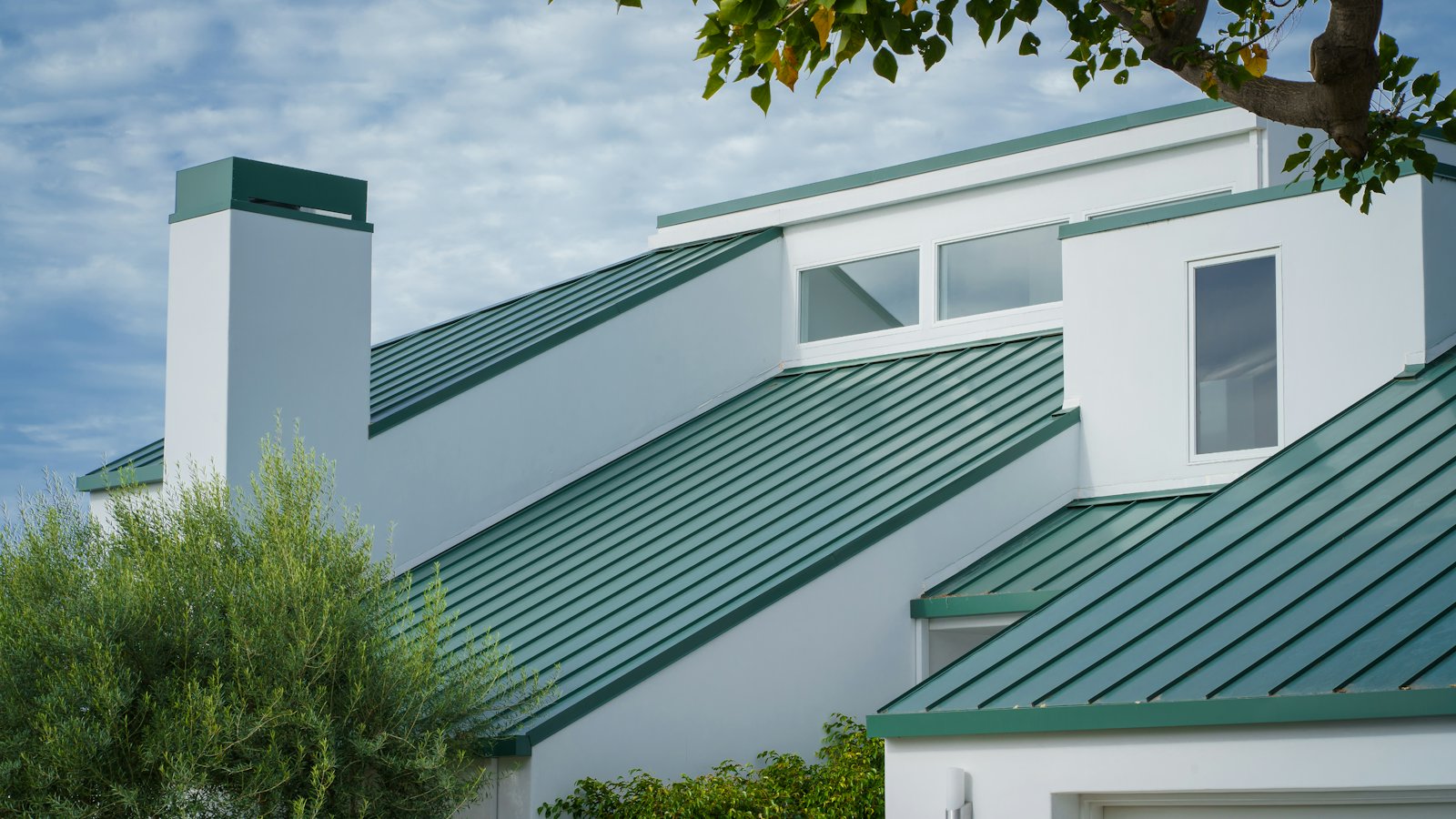
How much more does a metal roof cost in Kelowna?
Metal costs roughly two to three times as much per square foot. These are published Canadian ranges in Canadian dollars (Renoquotes, updated April 2026), not quotes:
- Asphalt shingle replacement: $6 to $13 per sq ft
- Standard single-family home in asphalt: $10,000 to $18,000
- Metal roof: $15 to $30 per sq ft
- Typical home in metal: $25,000 to $50,000
The spread inside each range is wide because the shape of the roof, not the material, drives most of the labour. A simple gable roof on a single-storey home sits near the bottom. A steep, cut-up roof with dormers and valleys on a hillside home in the Upper Mission or Black Mountain sits near the top. Metal is less forgiving of complexity than shingles, so on a roof with lots of valleys, skylights and chimneys the gap between the two prices usually widens.
Both figures normally cover tear-off, disposal and new underlayment. Your written quote should show GST, and any PST on materials, separately.
How long does each roof last in the Okanagan?
Renoquotes puts asphalt shingles at 15 to 25 years and metal at 50 years plus. The Okanagan is hard on asphalt in two ways: long, hot, sunny summers dry shingles out and wear off their protective granules faster on south- and west-facing slopes, and winter freeze-thaw cycles work at any spot where water gets underneath.
That lifespan gap is the real cost comparison. If you plan to stay in the house 30 years or more, a shingle roof will likely need replacing at least once in that time and a metal roof likely won't. If you expect to sell within five or ten years, you may not stay long enough to get the extra money back from metal, although a newer roof of either kind helps a sale.
Which handles Okanagan snow and ice better?
Metal sheds snow far more readily, which cuts the load on the roof and the time meltwater sits at the eaves. Shingles hold snow, so they rely more on good attic insulation and ventilation to avoid ice dams.
Sliding snow brings its own risks. A sheet of snow coming off a metal roof can bend eavestroughs, crush shrubs and land on a deck, a doorway or a path. Snow guards above entrances, decks, walkways and lower roofs are normal on metal roofs in snow country. If a metal quote doesn't mention them, ask why.
This matters more in the North Okanagan. Vernon, Coldstream, Armstrong and Lumby usually get more snow and longer cold spells than Kelowna or Penticton, so homes there see more ice dams and heavier snow loads. Whichever material you choose, ask for ice and water shield along the eaves and in the valleys, and fix attic air leaks and ventilation at the same time. A new roof on its own won't stop ice dams if the attic below it is warm.
Which is better if you live near forest or grassland?
Both can meet FireSmart Canada's advice. FireSmart recommends a Class A fire-rated roof covering for homes in wildfire country, and most architectural asphalt shingles and most metal roofing systems carry that rating. Untreated cedar shakes do not. Check the label or data sheet for the exact product you are quoted.
Metal's edge is that the surface itself can't burn, which is why many owners on the wildland edge choose it. The valley has good reason to think about this: the 2003 Okanagan Mountain Park fire burned into Kelowna, and the August 2023 McDougall Creek fire destroyed or damaged homes in West Kelowna and the Central Okanagan. Further south, the 2021 Nk'Mip Creek fire burned near Osoyoos and the 2023 Eagle Bluff fire near Oliver.
The roof covering is only part of it. Many homes catch from embers that collect in eavestroughs full of needles or blow into open vents. Keep eavestroughs and valleys clear, screen vents with fine metal mesh and clear the first 1.5 metres around the house of anything that burns.
Some properties in Kelowna and the Regional District of Central Okanagan sit in a wildfire development permit area that can set rules on building materials. Check with your local government before you choose.
Is a metal roof noisy, and how does it cope with summer heat?
On a house, not much. Residential metal is installed over solid wood decking and underlayment, so rain and hail sound much the same inside the living space as they do on shingles. The loud metal roofs people remember are usually on sheds and barns, fastened straight to open framing.
In summer, metal reflects more sunlight than dark shingles, especially in lighter colours or with a reflective coating, which helps keep the attic cooler during an Okanagan heat wave. Either way, the insulation and ventilation under the roof matter far more to your energy bills than the roofing itself.
Hail can dent metal, particularly thinner panels, though the dents are often cosmetic. Some insurance policies treat cosmetic dents on metal roofs differently, so ask your insurer before you decide.
Which is easier and cheaper to repair?
Shingles. Most roofers can replace a few damaged shingles in a short visit, and close colour matches are usually available. Flashing around chimneys, walls and vent pipes is the usual weak spot on either roof. Published Canadian figures from HomeStars put a general roof repair at $500 to $1,800 and a flashing repair at $250 to $600.
Metal needs attention less often but more specialised help when it does. Exposed-fastener steel panels are held down with screws whose rubber washers wear out over the years and need checking or replacing. Standing-seam systems hide their fasteners and mostly need the sealant at trim and penetrations checked. A badly damaged panel can mean replacing a full-length sheet, and matching an older, faded colour is hard. Fewer roofers specialise in metal than in shingles, which can affect both the price and how soon work can start.
So which roof should you choose?
Match the roof to your plans for the house:
- Staying 25 years or more: metal's longer life usually pays back the higher price
- Selling within about 10 years: a good architectural shingle roof is usually the better value
- Next to forest or grassland: either Class A option works, and metal's non-combustible surface appeals to many owners
- A North Okanagan home that gets heavy snow: metal sheds it well, but budget for snow guards
- A complex roof with many valleys, dormers and skylights: shingles are easier and cheaper to detail well
- A tight budget right now: a well-installed shingle roof with proper ventilation and flashing is a sound choice
If you are torn, ask for two prices on the same scope, one in each material, from the same roofer. Seeing the real difference for your own roof makes the decision easier than any average.
What should you check in a metal or shingle quote?
Whichever material you choose, the quote should list:
- The exact product, colour and fire rating (and for metal, the panel profile and gauge)
- Full tear-off to the deck, and a per-sheet price for replacing rotten decking
- Ice and water shield at the eaves and valleys, plus synthetic underlayment
- New flashing, drip edge, vents and pipe boots
- Snow guards on a metal roof wherever snow could slide onto a path, deck or lower roof
- Disposal, clean-up and a written workmanship warranty alongside the manufacturer's warranty
Before you sign, ask for a WorkSafeBC clearance letter. In BC, if a roofer's coverage isn't in good standing, the homeowner can be held liable for unpaid premiums. Ask for proof of liability insurance too. Membership in the Roofing Contractors Association of BC (RCABC) is a plus, but it isn't a legal requirement. Like-for-like re-roofs usually need no building permit, but check with your local government first, especially in a wildfire or heritage development permit area.
When you are ready, a free quote request through Okanagan Roofers goes to one insured local roofer with WorkSafeBC coverage, who can price both options for your home. We are a free quote service, not the roofer, and the roofer pays us a referral fee.
What you get for the price
The standard we ask of every roofer we refer you to
The roofer does the work, not us. Ask for each of these in your written quote and contract.
- A roofer with WorkSafeBC coverage (clearance letter on request) and liability insurance (certificate on request)
- A written quote that lists what will be done, the materials and the price
- Manufacturer-approved installation, so the shingle or metal warranty stays valid
- Photos of the problem before work starts, and of the finished work
- Ice and water shield at the eaves and valleys, as BC's snow and freeze-thaw demand
- Site left clean: old shingles, nails and debris taken away, with a magnet sweep of the yard
- A walk-through of the finished job before final payment
Before and after photos, and a written scope
You get photos of what was wrong and what was done, and a written scope before anything starts, so you know exactly what you are paying for.
Insured roofer with WorkSafeBC coverage, liability certificate on request
Questions people ask
Sources
Related services
Published November 18, 2026.